
Resources
Articles from the plant floor up.
Industrial context, operational visibility, and the future of factory intelligence.
CTO Notes
How we think about industrial context, from the people building it
"Contextualization is not about combining data. It is about knowing what was happening when it was measured."
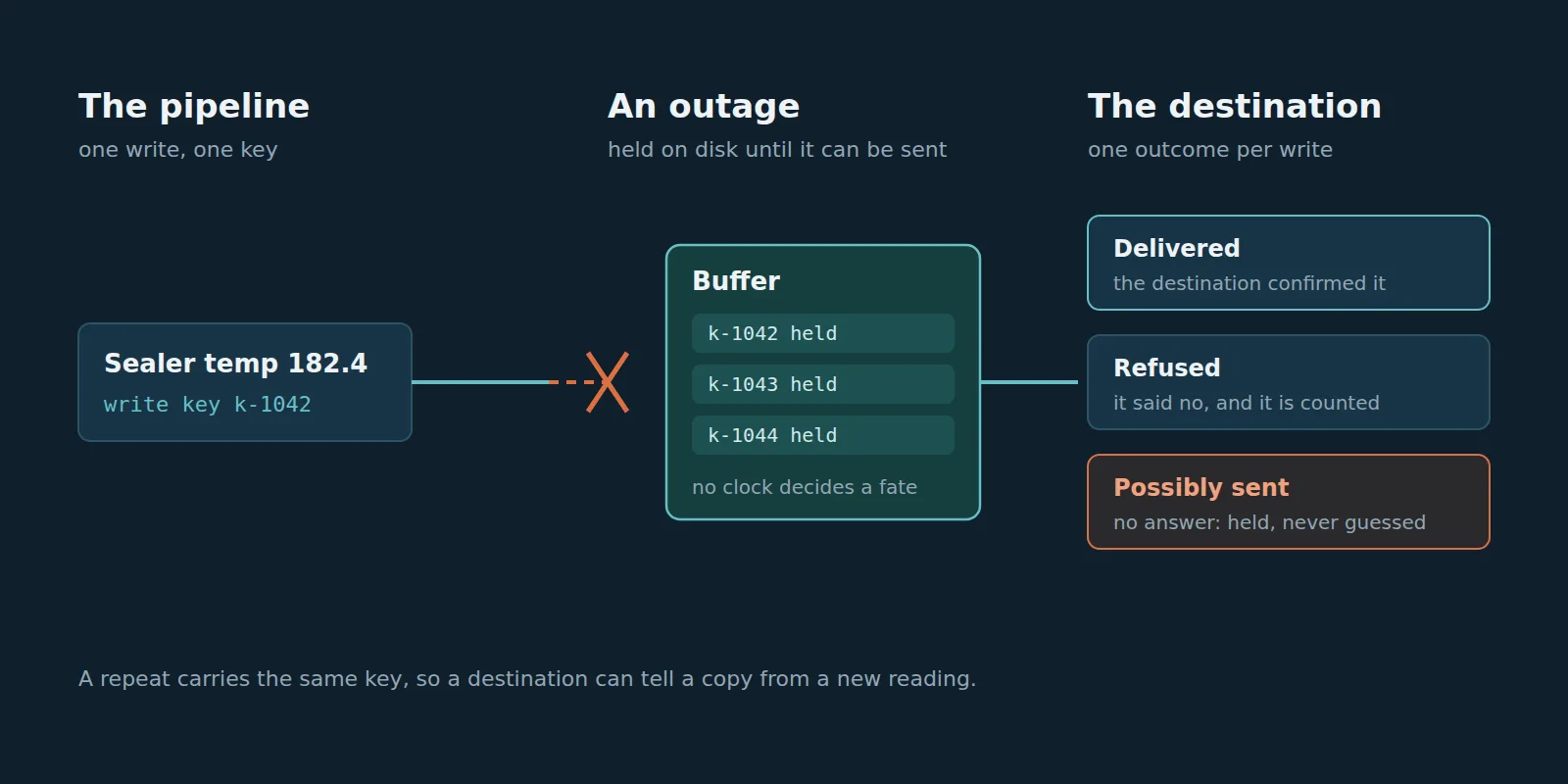
Delivered Must Mean Delivered: What Store-and-Forward Really Has to Guarantee
Every pipeline buffers during an outage. The hard part is what it tells you afterwards. A system that says delivered has to mean it, and when it cannot know, it has to say so. Here is what that demands, and what holding our own product to it found.
Read the article
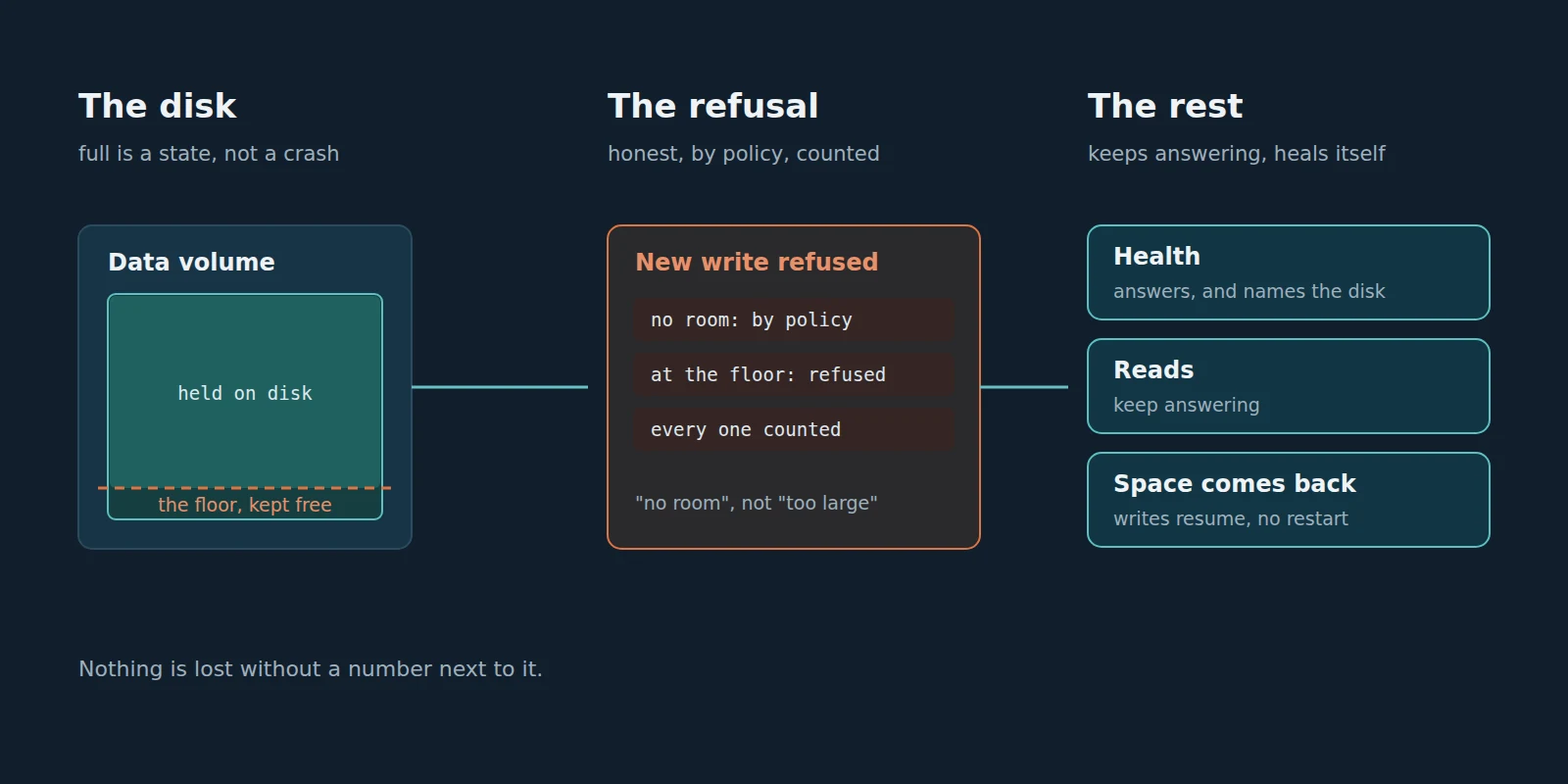
Your Edge Disk Will Fill Up. What Should Your Data Platform Do?
At the edge, a disk that fills up or freezes during an outage is a normal day, not an edge case. A data platform has to refuse honestly, count exactly what it could not keep, keep the rest of the system answering, and heal without a restart. Here is why, and what filling our own disk on purpose found.
Read the article
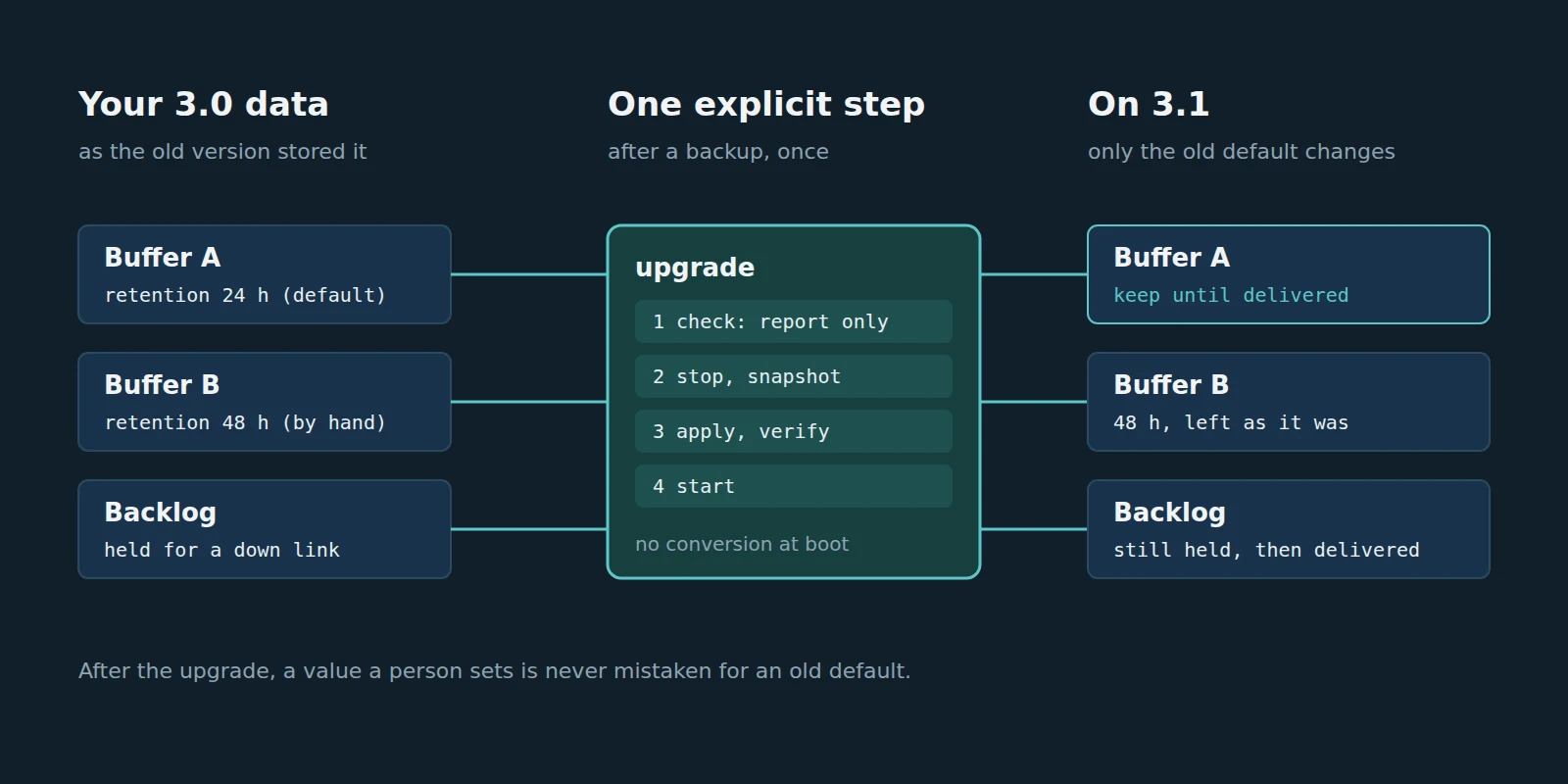
Why We Don't Rewrite Your Data When You Upgrade
The convenient upgrade swaps the image, starts, and quietly fixes your stored data on the way up. We think a platform should never do that. An upgrade that changes data should be one explicit step, taken after a backup, that tells you what it will change and keeps the backlog you are still waiting to deliver.
Read the article
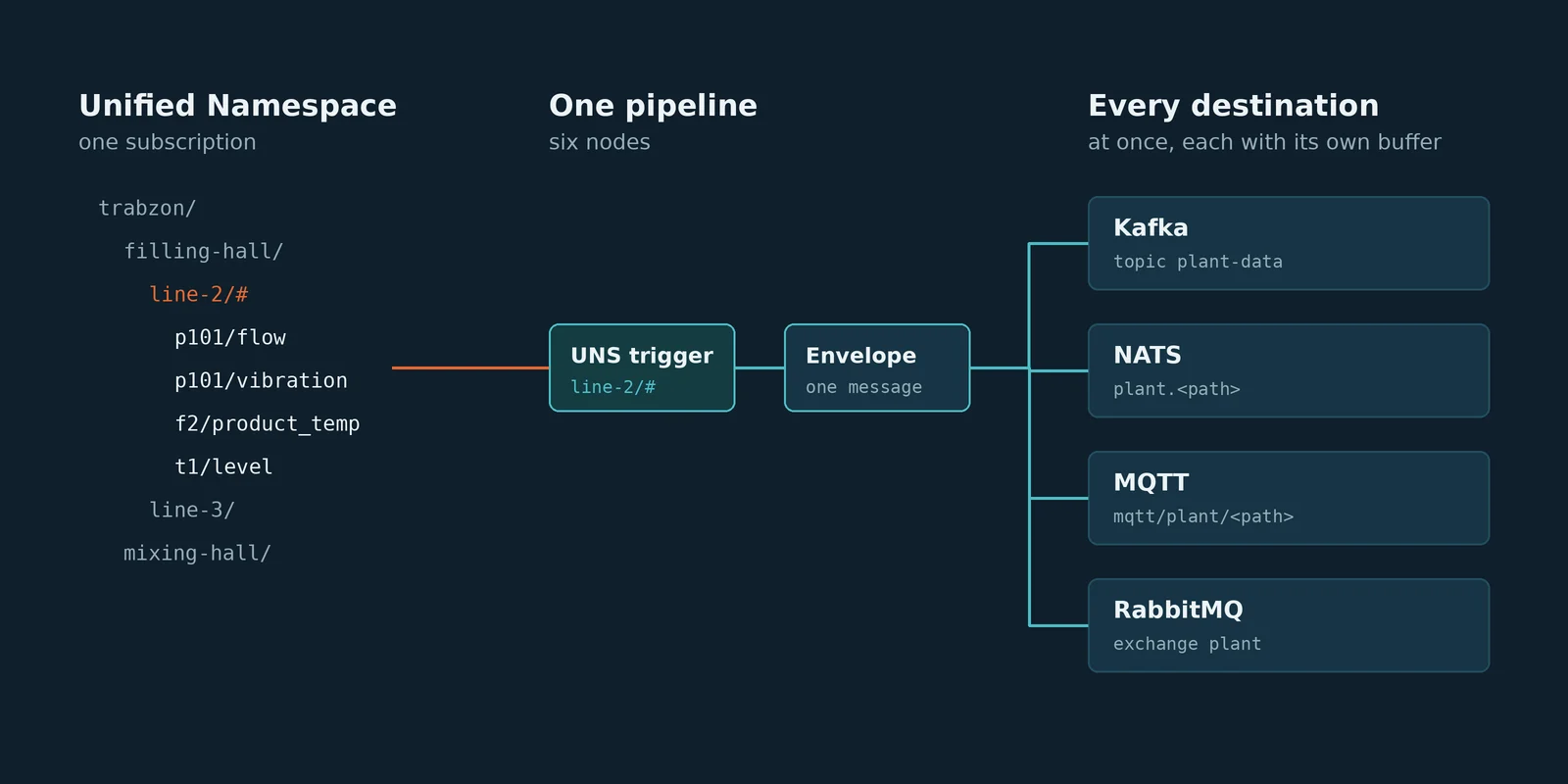
The Fifth Bridge: Why Your Namespace Should Leave Through One Pipeline
Four teams want plant data on four brokers. The usual answer is four bridges, and every new consumer adds another. The better answer is to decide once what leaves the namespace, and let every destination receive it in its own language.
Read the article
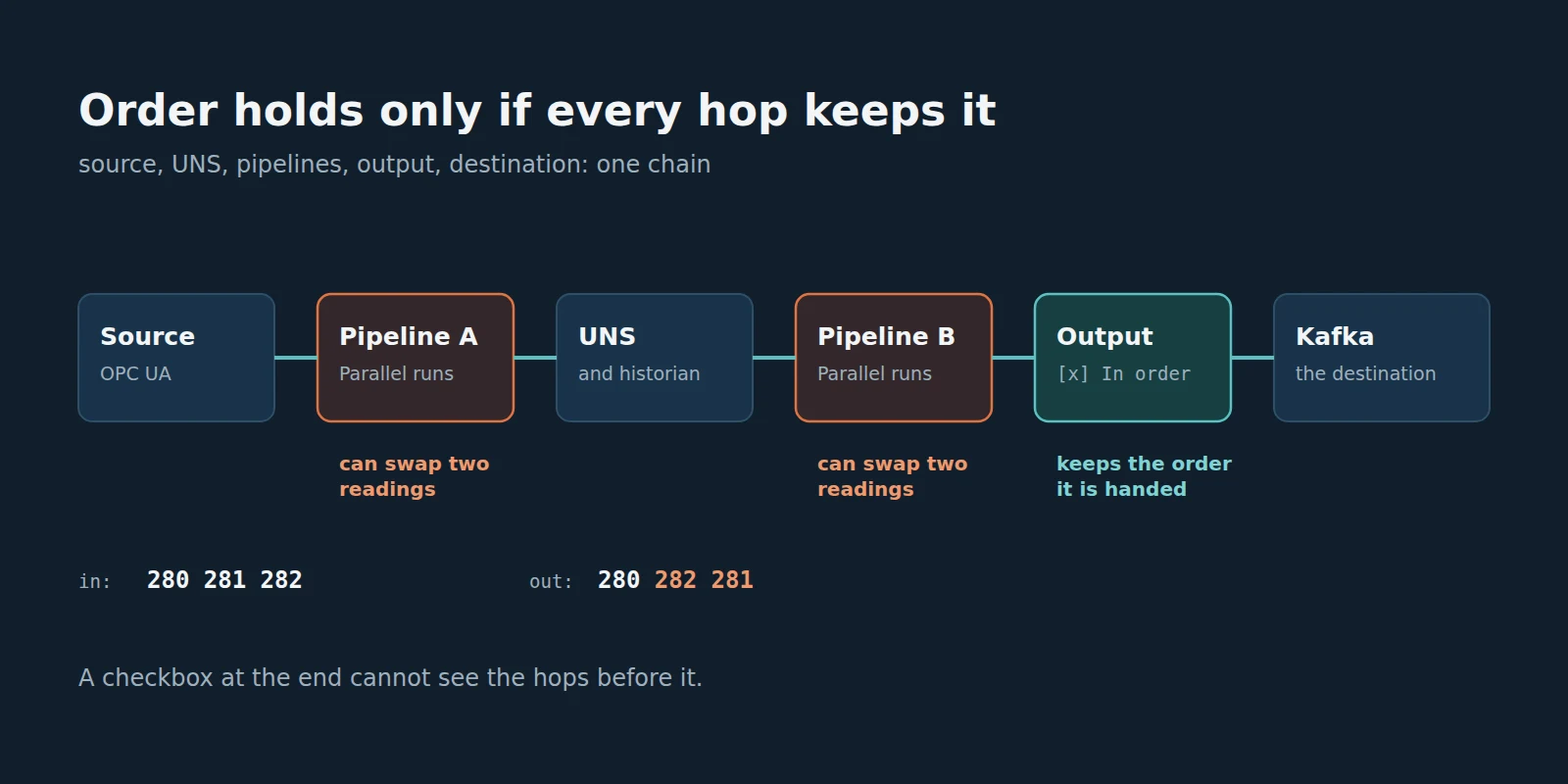
In Order Is a Chain, Not a Checkbox
Turning on in-order delivery at an output does not make data arrive in order. Order is a property of the whole chain, from the source to the destination, and every hop has to keep it. Here is why, and what replaying a real evaluation of our own product taught us about it.
Read the article
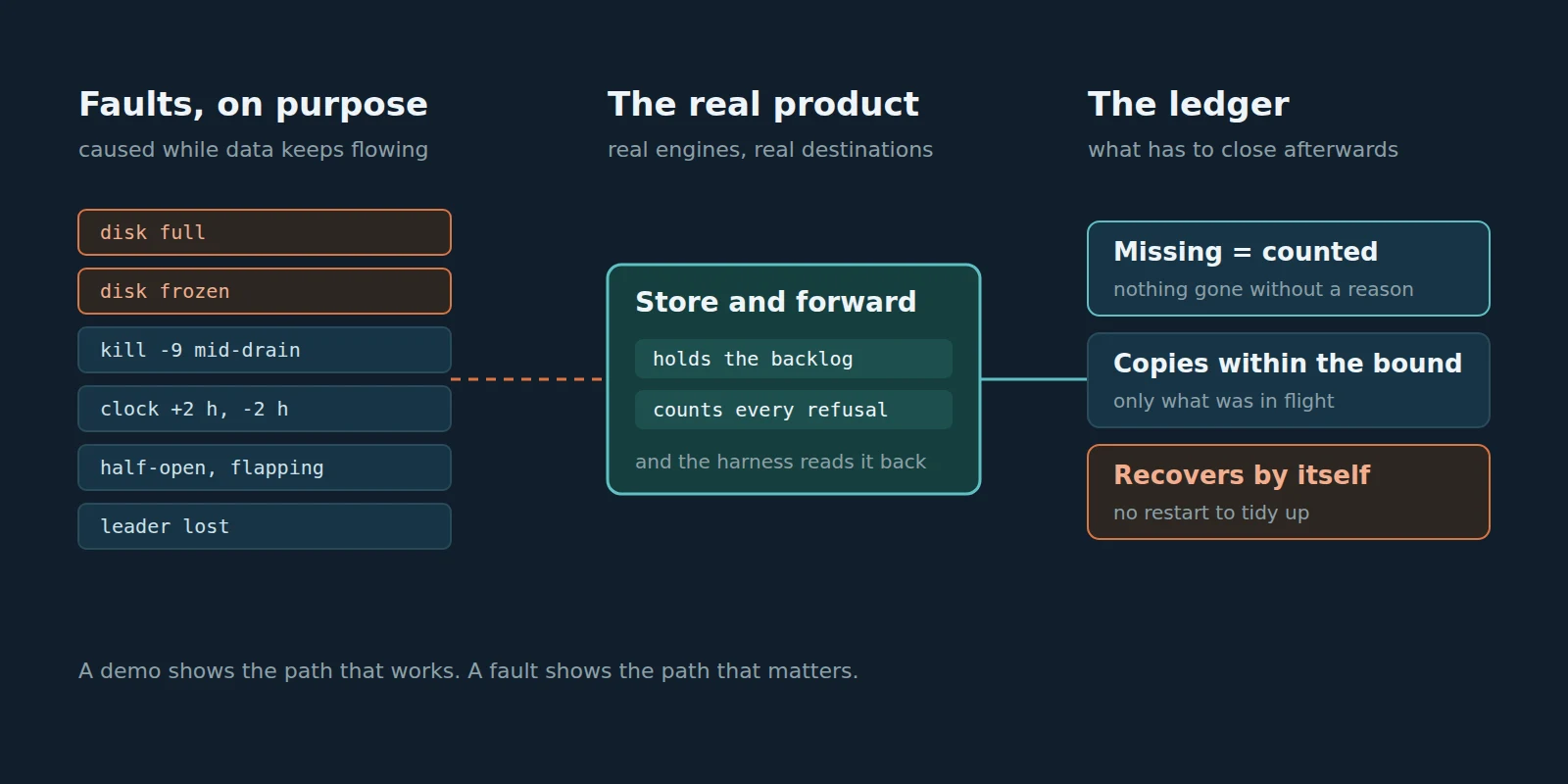
Break It on Purpose: What We Learned Chaos-Testing an Industrial Data Platform
A demo proves the path that works. Trust comes from the paths that fail: full disks, frozen disks, killed processes, clocks that jump, links that half die. We caused all of them on purpose. Here is what held, what broke, and how we proved each fix.
Read the article
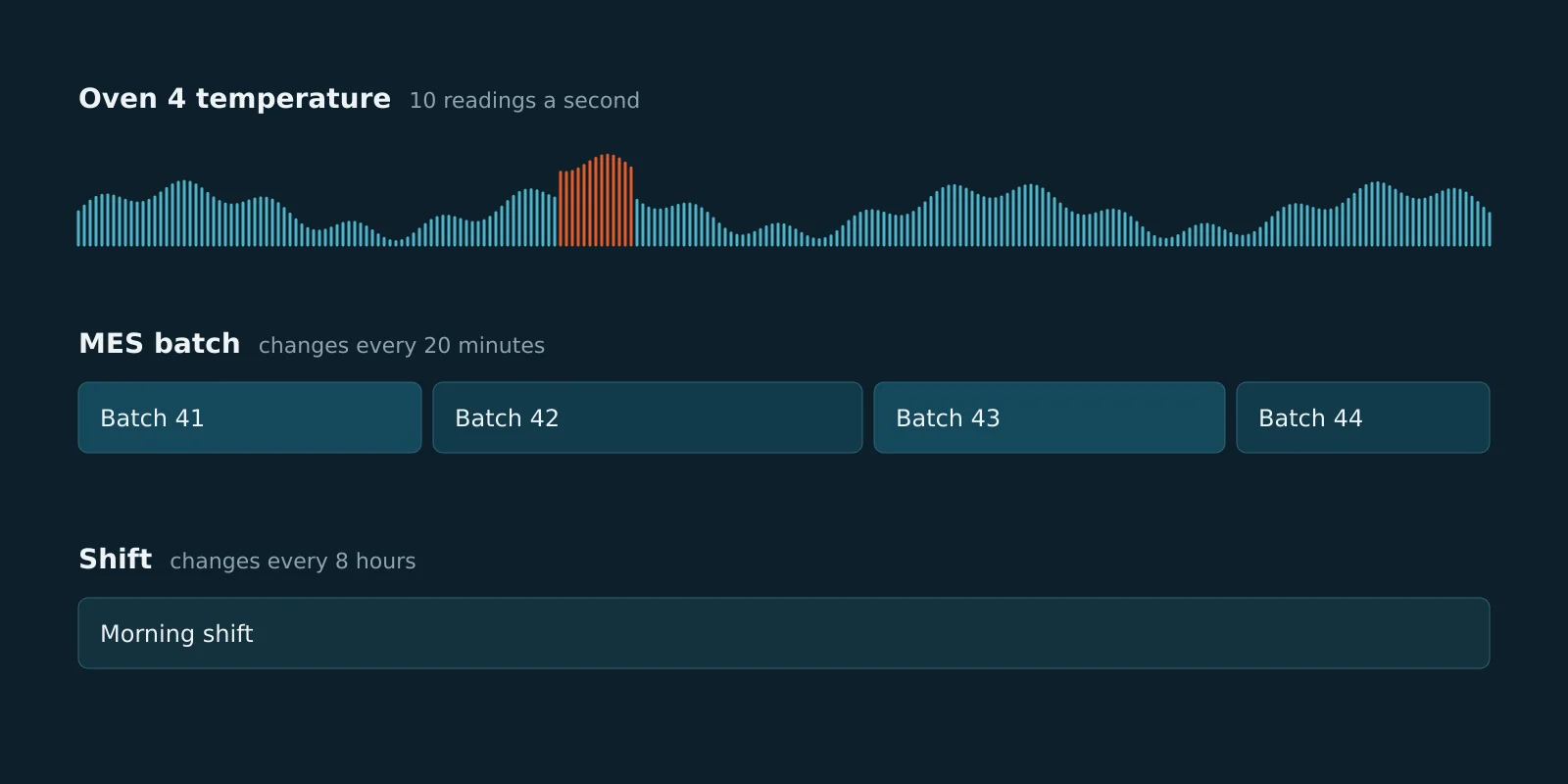
The Reading That Joined the Wrong Batch: Why Contextualization Is Not a Bigger JSON Payload
Attaching a batch ID to every sensor reading feels like contextualization. It is enrichment. Real context means knowing what was happening at the moment a value was measured, and that is a question about time, not payload size.
Read the article
CEO Insights Series
Why Industrial Data Needs a Single Source of Truth
"Growth stalls not because factories cannot produce, but because organizations cannot adapt."
The Manufacturing Growth Equation: Why Visibility and Velocity Drive Competitiveness
In modern manufacturing, growth is no longer constrained by capacity, it is constrained by latency. How fast can your organization see, decide, and act?
Read the article
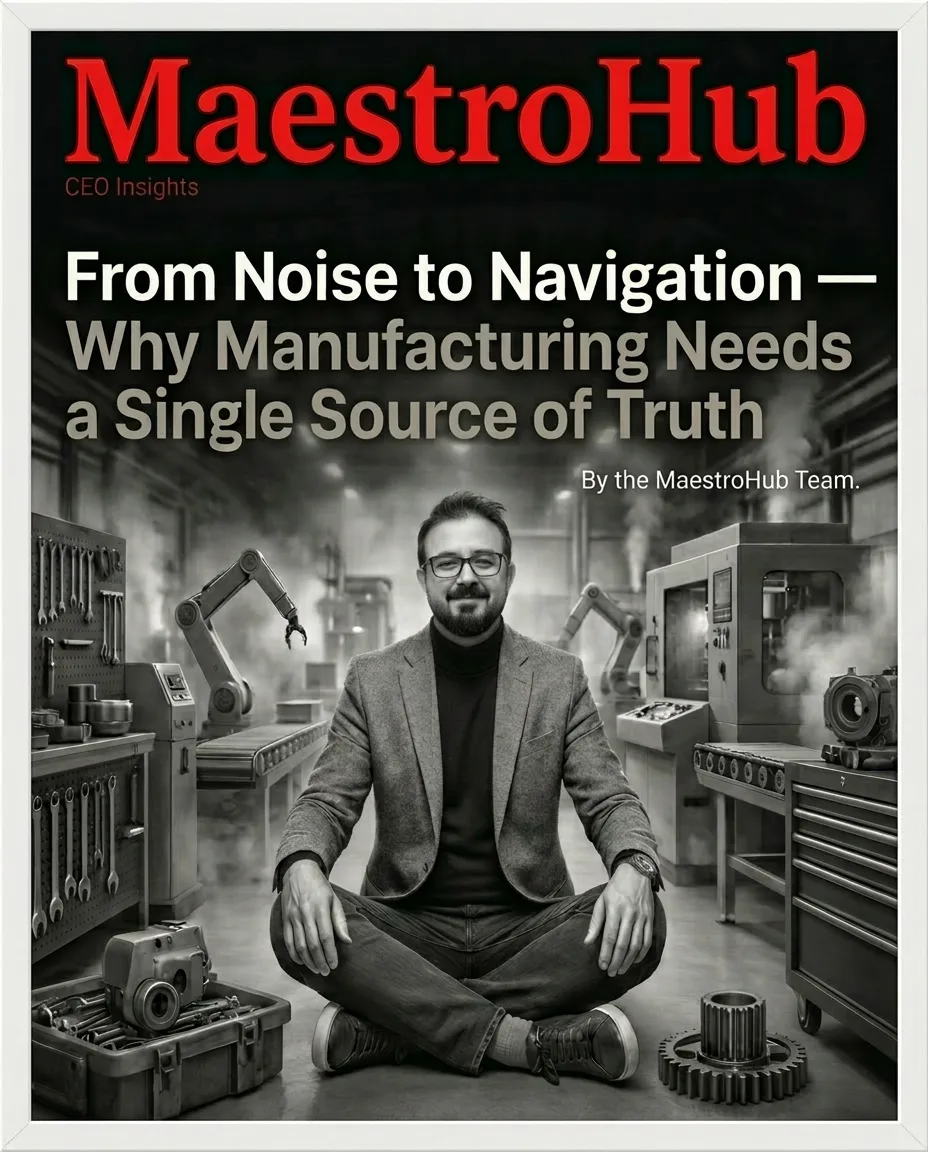
From Noise to Navigation: Why Manufacturing Needs a Single Source of Truth
Despite massive data volume, traditional manufacturing struggles with fragmented visibility, causing decision delays and stalling productivity growth near 0.9% annually.
Read the article
Human Layer Series
Human Layer in Industrial Automation
"Finance doesn't reject innovation, it rejects uncertainty. The real gap is trust, not data."
The CFO's Dilemma: Bridging the Data Gap in Manufacturing Finance
How DataOps solves ROI attribution and builds trust between IT, OT, and Finance.
Read the article
The Human Layer: Why Digital Transformation Starts with People, Not Platforms
Digital transformation success is defined not by the technology stack or investment size, but by the 'Human Layer', the foundation of trust and shared belief that dictates whether people adapt to change.
Read the article
Rather see it on your own plant?
Tell us what systems you run and what you're trying to achieve. Our team can help you explore the right licensing and implementation options.